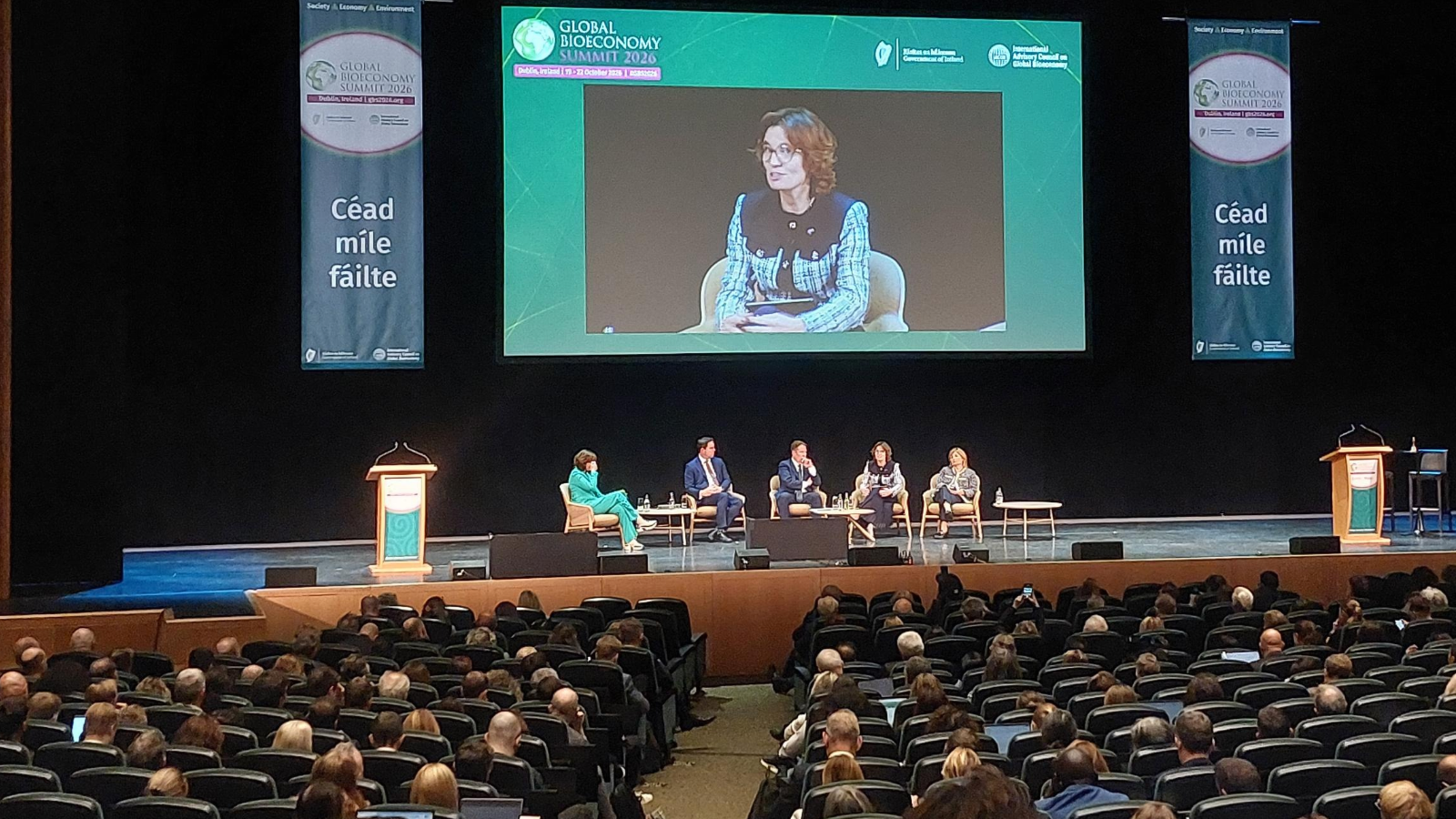
ERRIN brings regional perspectives to the Global Bioeconomy Summit 2026 in Dublin
ERRIN joined the Global Bioeconomy Summit 2026, held in Dublin, Ireland, on 19–22 October 2026, contributing to discussions on the role of regions in advancing the bioeconomy transition. As part of the Summit programme, ERRIN’s Bioeconomy Working Group co-organised a workshop on the enabling conditions for place-based bioeconomies to succeed.
Positioning the bioeconomy in the post-2030 agenda
Held under the theme ‘Bioeconomy for socio-economic transformation and climate action’, the Summit brought together more than 1900 participants from over 65 countries, representing policy, research, industry, international organisations and civil society.
The Summit explored how bio-based innovation can move from research to market deployment, and how enabling policies, investment, market development and international cooperation can accelerate this process. It also highlighted the contribution of the bioeconomy to climate action, nature protection, economic resilience and sustainable development.
Among the key outcomes was the presentation of the 2040 Bioeconomy Vision and the Dublin Global Bioeconomy Goals, positioning the bioeconomy as an important driver of the post-2030 sustainable development agenda.
Discussions also focused on translating the EU Bioeconomy Strategy into action by scaling up through policy, markets, innovation and investment. Reflecting this focus on moving from ambition to implementation, Ireland launched its first National Bioeconomy Strategy, BioScale 2030, during the Summit, setting out a national framework to turn research, innovation and renewable biological resources into sustainable businesses, new markets and regional opportunities.
In the same session, Commissioner Jessika Roswall launched the Bio-Based Europe Alliance, bringing together companies and other value-chain actors to strengthen market demand for bio-based products and support their uptake. The Bio-Based Europe Alliance is a voluntary initiative that brings together European buyers of bio-based materials and products, primary producers, suppliers, and national and regional authorities committed to accelerating the uptake of European bio-based solutions. Organisations wishing to join the Bio-based Europe Alliance will be able to apply soon, via this website.
Learn more about the Global Bioeconomy Summit, browse the resources and materials here.
ERRIN co-organises a workshop on enabling place-based bioeconomies
As part of the official Summit programme, ERRIN co-organised the workshop ‘Building an enabling environment for place-based bioeconomies to succeed’, together with the European Committee of the Regions, Climate KIC, the Centre for Development Research (ZEF), Schmidt Sciences, Forschungszentrum Jülich and Jaffe Policy Consulting.
ERRIN led the discussion on ‘Regional Governance and Ecosystem Orchestration’, exploring the role of regional governance in mobilising territorial assets, connecting stakeholders and coordinating action, as well as the support needed from national and European frameworks to enable long-term bioeconomy development.
Key outcomes emerged from the discussion:
- Regional authorities can act as enablers of innovation and drivers of market transformation. Regulatory barriers can hinder the implementation and scaling of innovative bio-based solutions. Regulatory sandboxes offer opportunities to test new approaches and support regulatory adaptation. Public procurement can also accelerate the bioeconomy transition by creating demand for innovative solutions and supporting the development of bio-based markets.
- Embedding bioeconomy in regional strategies and Smart Specialisation Strategies (S3) can provide long-term direction and support coordinated action. A clear regional vision can help mobilise funding, align priorities and guide investment. Integrating bioeconomy across relevant economic and industrial sectors can strengthen regional innovation ecosystems and make better use of local assets and capabilities.
- Strengthen collaboration within and between regional ecosystems. Cross-sectoral partnerships and interregional collaboration can connect complementary capabilities, facilitate knowledge exchange and support the development of shared value chains.
- Enable effective multilevel governance. Better coordination between regional, national and supranational priorities, combined with predictable funding and supportive regulatory frameworks, is essential to translate local potential into lasting impact.
Please find the full workshop report attached.
Building on the discussions and outcomes of the Summit, ERRIN will continue to work with its members to identify emerging opportunities, monitor relevant initiatives and strengthen connections between regional innovation ecosystems. Through its Bioeconomy Working Group, ERRIN will keep connecting regional stakeholders and supporting the development of place-based bioeconomies across Europe.