
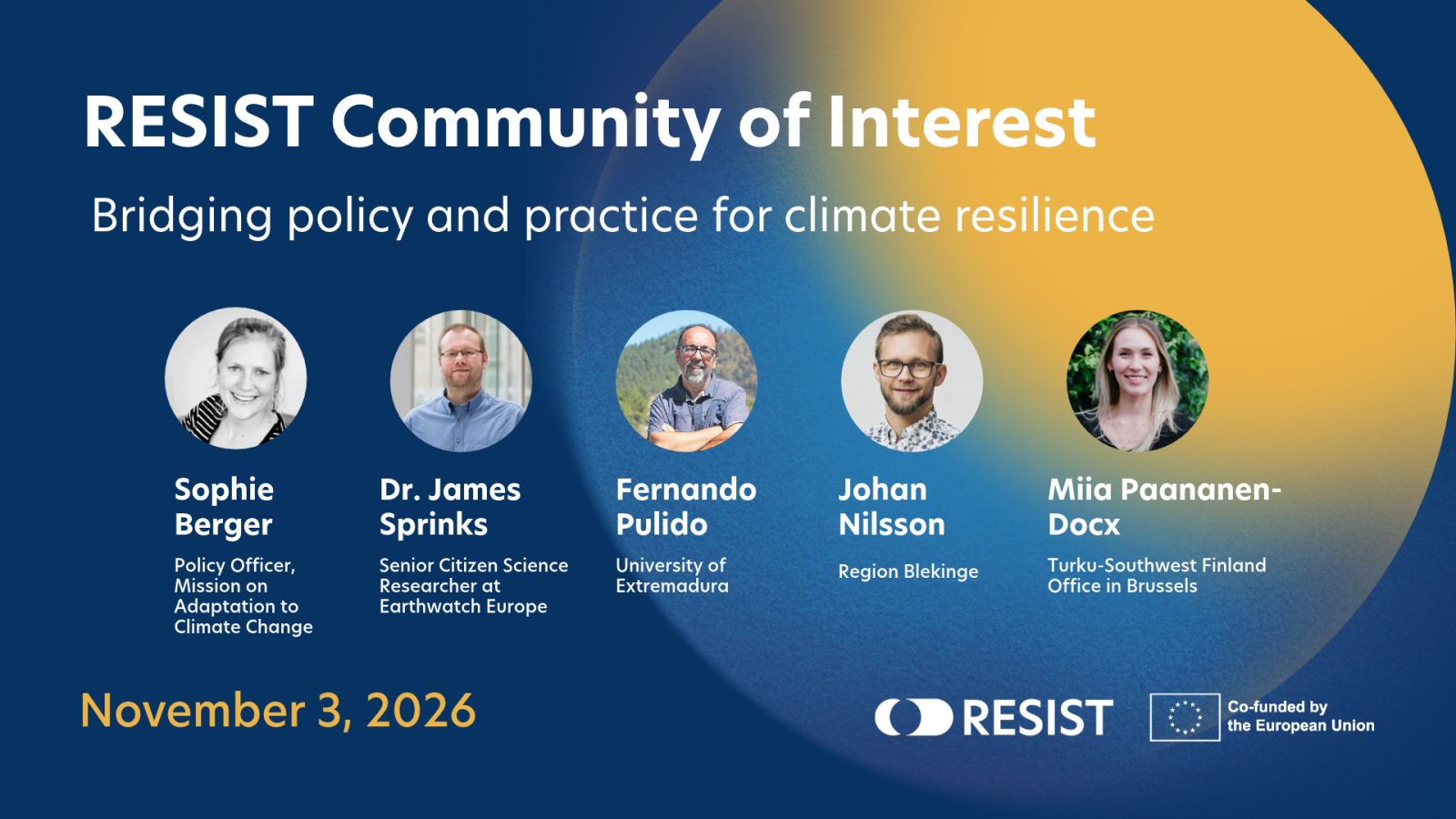
Bridging policy and practice for climate resilience
On 3 November, the RESIST Community of Interest met online to discuss a key priority on the European policy agenda: climate resilience and the challenge of translating policy ambitions into meaningful action.
The discussion came at a timely moment, following the recent publication of the European Commission's new Climate Resilience Framework and as preparations continue for the next Multiannual Financial Framework. During the session, speakers explored how regions, policymakers, researchers and communities can work together to strengthen resilience to climate change and ensure that adaptation measures deliver tangible benefits for citizens.
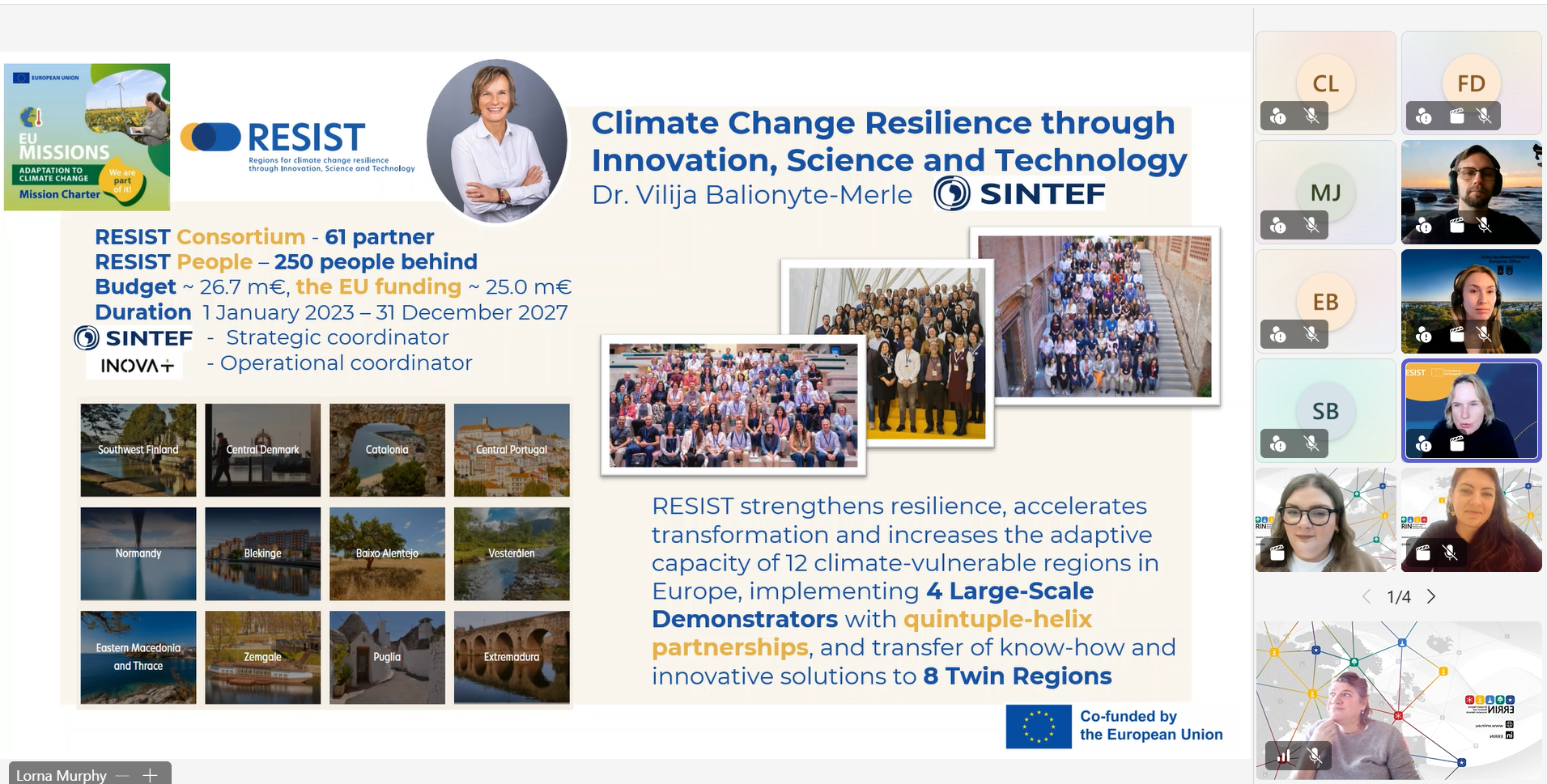
Opening the discussion, Vilija Balionyte-Merle, RESIST Coordinator, reflected on some of the achievements of the RESIST project so far. She highlighted how RESIST is already working to bridge the gap between policy and practice through a combination of demonstration activities, scientific support, stakeholder engagement and capacity building. Drawing on experiences from across the participating regions, she emphasised that successful adaptation isn't about replicating a single solution everywhere but is about strong collaboration and developing solutions tailored to local circumstances.
Miia Paanenen-Docx, Senior Advisor at the Turku-Southwest Finland Office and one of the working group leaders for the ERRIN Climate Adaptation and Resilience Working Group, highlighted ERRIN's ongoing advocacy work in the climate resilience space, such as ERRIN's contribution to the stakeholder consultation on the Climate Resilience Framework earlier this year. She also underlined the importance of maintaining the structures of the EU Mission on Adaptation and ensuring strong regional involvement in future resilience plans and funding mechanisms. You can find here the letter that ERRIN sent to five members of the European Commission underlining the strategic importance of preserving and strengthening the EU Missions and the mission-oriented approach as central pillars of Europe's competitiveness, resilience and innovation agenda.
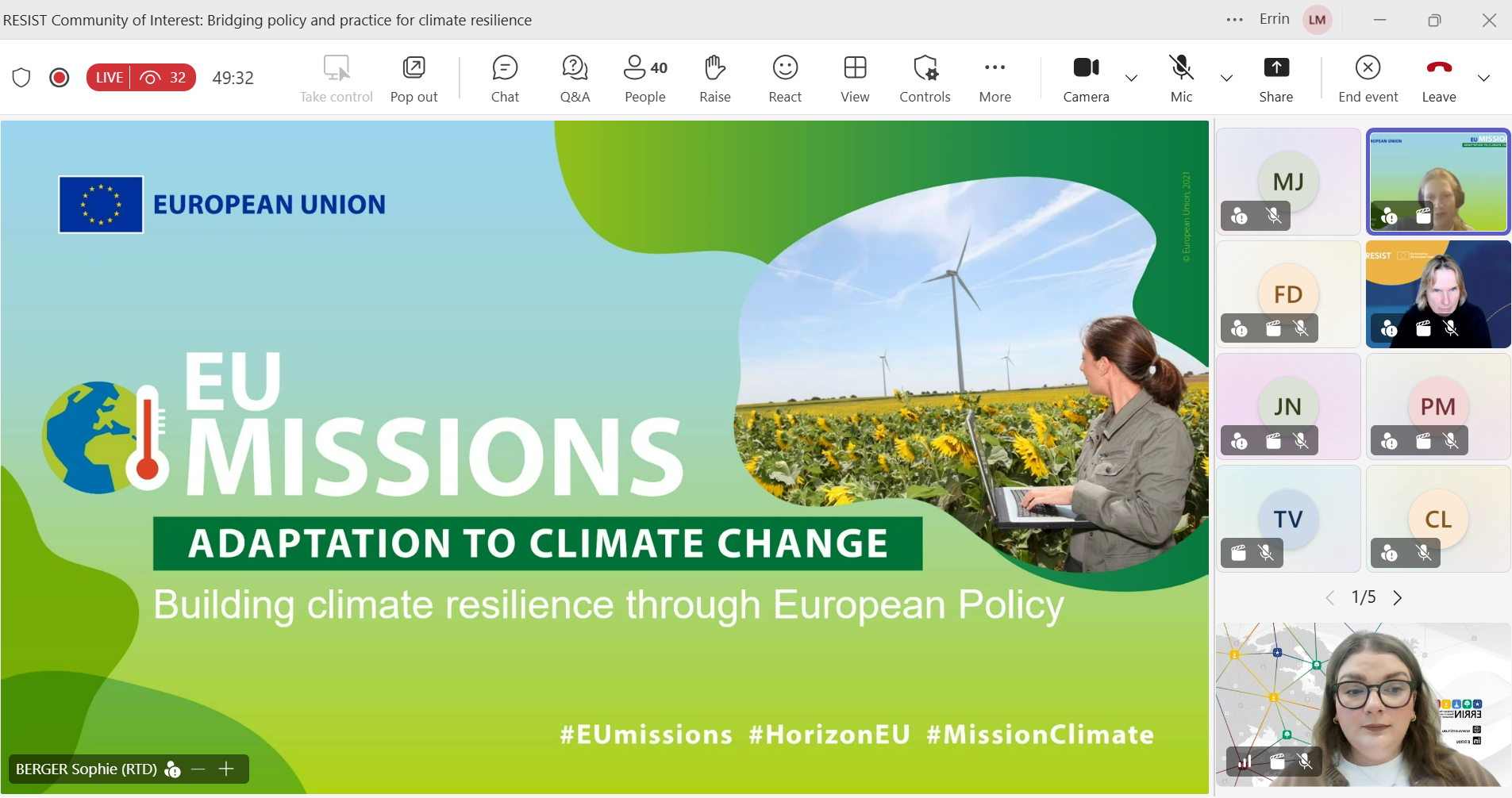
The session then turned to the European policy context, with Sophie Berger, Policy Officer at the European Commission and member of the Mission Secretariat for the EU Mission on Adaptation to Climate Change, providing an overview of the newly published EU Framework for Climate Resilience.
She explained how the newly published EU Framework for Climate Resilience seeks to move climate resilience from a specialist policy area into a mainstream consideration across all sectors and levels of government. Key elements she highlighted included a common climate risk planning framework, clearer identification of risk owners, streamlined national resilience planning and new practical tools for assessing climate vulnerabilities and adaptation options. To read more of ERRIN's analysis of the newly published Climate Resilience Framework, there is an article on the ERRIN website here.
Sophie also noted that the Mission Adaptation has already surpassed its original targets, and that much of the Mission work has emphasised that adaptation is ultimately local. In her view, climate resilience is rapidly becoming a broader economic, territorial and societal priority for Europe rather than solely an environmental issue, and so this is why the framework is advocating for a more holistic, cross-sectoral approach.
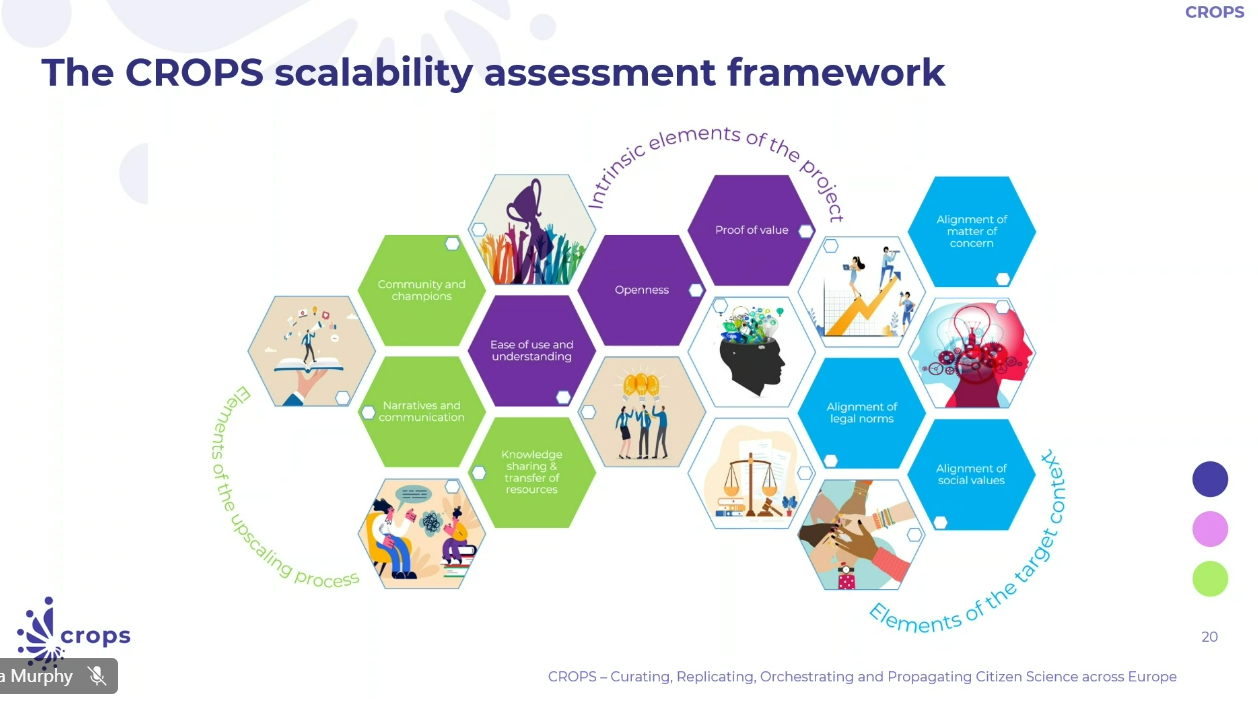
Dr. James Sprinks, Senior Citizen Science Researcher at Earthwatch Europe, also joined the session to give an overview of the CROPS project, and highlighted the role that citizen science can play in supporting climate resilience and the EU Missions more broadly. He argued that citizens can generate valuable local data, strengthen community ownership of climate challenges and improve public understanding of environmental issues. However, issues such as short-term funding cycles, fragmented data systems, interoperability barriers and limited mechanisms for integrating citizen-generated data into policy-making prove to be persistent barriers for the involvement of citizen science data in policy development and implementation.
Attendees also had the opportunity to hear some success stories from the RESIST regions!
Fernando Javier Pulido Díaz, from the University of Extremadura, presented a practical example of climate resilience in action through work being carried out in Extremadura following devastating wildfire events. He explained how the region is redesigning fire-prone landscapes by replacing continuous dense pine plantations with more diverse and resilient mosaic landscapes incorporating agroforestry systems, productive firebreaks and lower fuel loads. This work has resulted in strong local partnerships and has been successful in securing support from the regional government.
Johan Nilsson, from Region Blekinge, shared that his region is increasingly viewing climate resilience through the broader lens of preparedness and societal resilience. He argued that resilience is not primarily about technology or policy, but about collaboration between different actors working towards a shared vision of the future. Through RESIST, Blekinge has focused on using digital twins, immersive technologies and climate visualisations to help planners, decision-makers and citizens better understand future climate risks. This work is helping municipalities to engage in much more informed discussions about climate preparedness and resilience. Read more about the ongoing work of the RESIST regions here.
The session highlighted the fact that climate resilience is most effective when policy, research, innovation and local action are closely connected. Whether through European policy frameworks, regional adaptation projects, citizen science initiatives, wildfire management strategies or digital planning tools, speakers consistently emphasised that resilience is built through partnerships, shared learning and place-based action. Regions are not just implementers of climate policy, but are essential actors in testing solutions, engaging communities and shaping Europe's climate-resilient future.
The slides from the session can be viewed here.
RESIST Community of Interest
- Lorna Murphy
- 04/11/2026
-
Working Group
-
Document